 Ephemundi
←
Inventory no. 003 — Islamic Art · The Traveller’s Cabinet
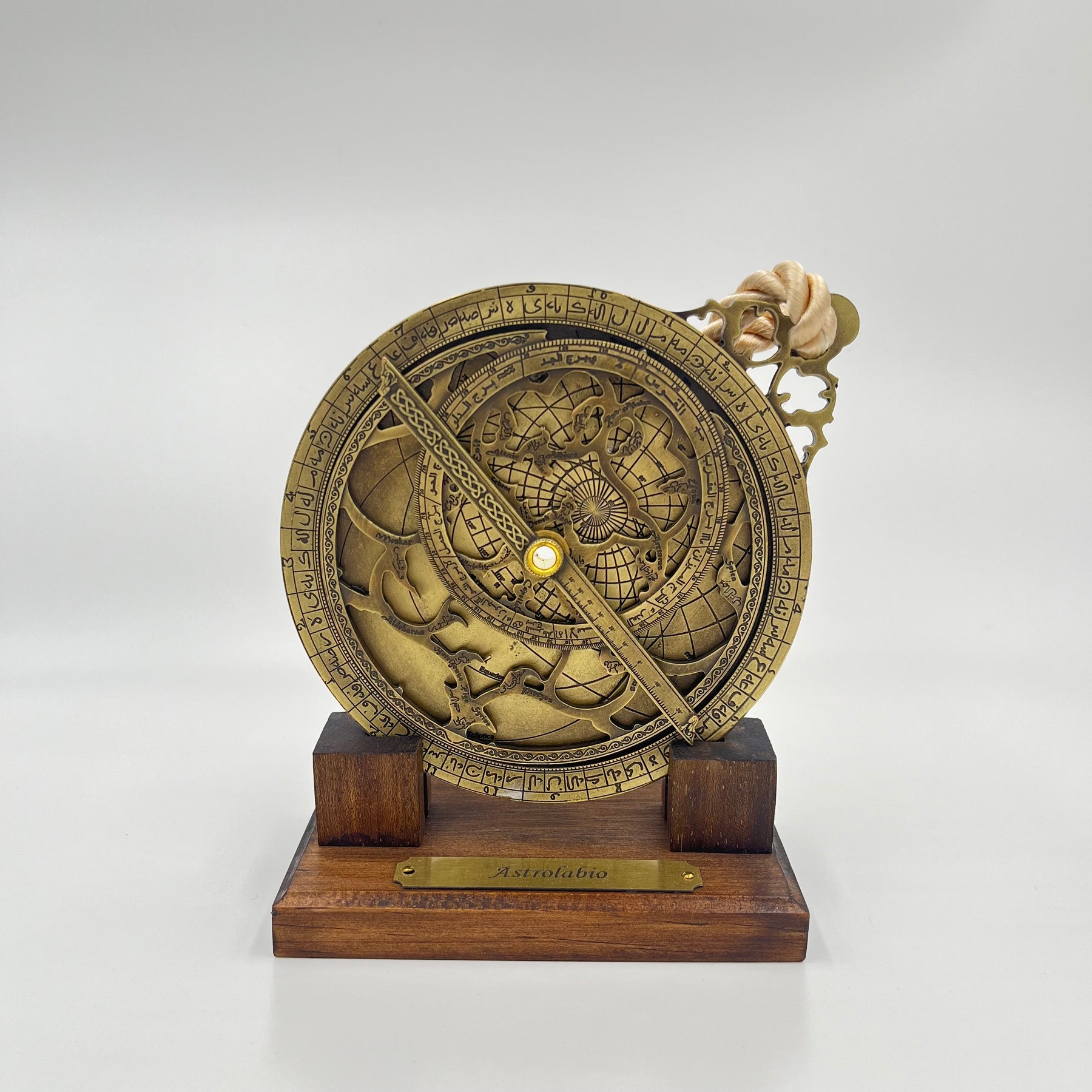
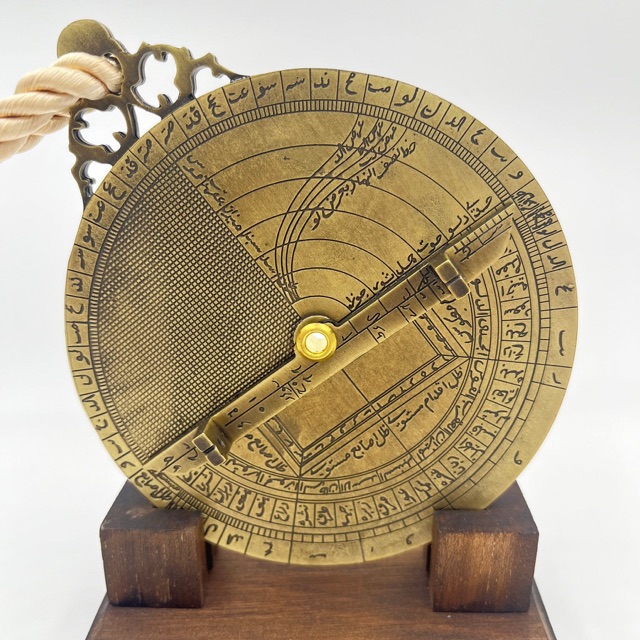
Arabic astrolabe
Sold
- Origin
- Spain
- Period
- 21st century (replica)
- Material
- Bronze-plated metal
- Dimensions
- ⌀ 10 × 12 cm
- Collection
- Islamic Art · The Traveller’s Cabinet
€130
View this piece in the houseOne-of-a-kind piece. Insured shipping, in France and abroad. Fourteen days to withdraw after receipt.
Detailed notice
Origin: Spain.
Maker: Antiquus (Viejos Inventos).
Period: 21st century.
Material: bronze-plated metal.
Size: diameter 10 cm × 0.5 cm; height 12 cm.
Condition: new (replica).
In the Islamic world, the astrolabe was first developed in the East (the Mashriq), in today's Syria, Iraq and Egypt, then spread widely across North Africa (the Maghreb) and into al-Andalus, where instruments were made in Toledo as early as the 11th century.
In the 11th century (the 5th century of the Hegira), the Andalusian astronomer Ibn al-Saffar wrote a treatise on the construction and use of the astrolabe. Translated into Latin in the 12th century, it was copied many times and strongly influenced Christian Europe – which is why so many stars and astronomical terms still carry Arabic names.
The transmission of Arabic science to Christian Europe began mainly in the monasteries closest to al-Andalus; the Benedictine abbey of Santa Maria de Ripoll was a leading centre of translation into Latin in the 10th and 11th centuries.
According to its maker, this replica is inspired by an astrolabe made by Muhammad Muqim of Lahore in 1643.